CONVERGING SECURITY SYSTEMS WITH AUTOMATED PHYSICAL ACCESS CONTROL IN HEALTHCARE
Healthcare Centre Solutions
Exploring Diverse Commercial Building Types
❖ Hospitals
➤ Primary Care Centers
❖ Specialty Care Centers
➤ Rehabilitation Centers
❖ Nursing Homes
➤ Laboratories
❖ Healthcare Data Services
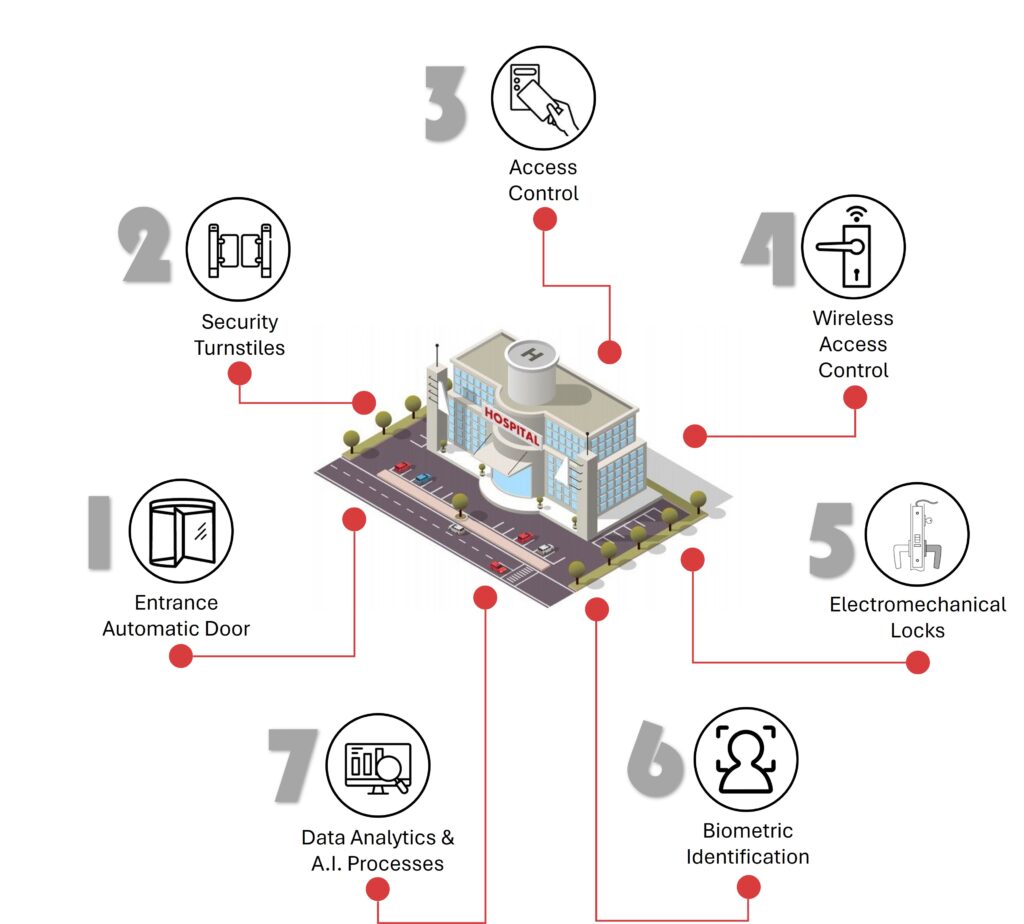
Balancing Medical Excellence and Security in Healthcare Facilities
Healthcare facilities focus on providing essential medical services and improving community health. This significant responsibility highlights the need for effective security and access control solutions that support their mission, reduce operational burdens, and help medical professionals concentrate on delivering the best care to their patients.
SECURITY PORTAL
Independent and Supervised-Free Security Portals
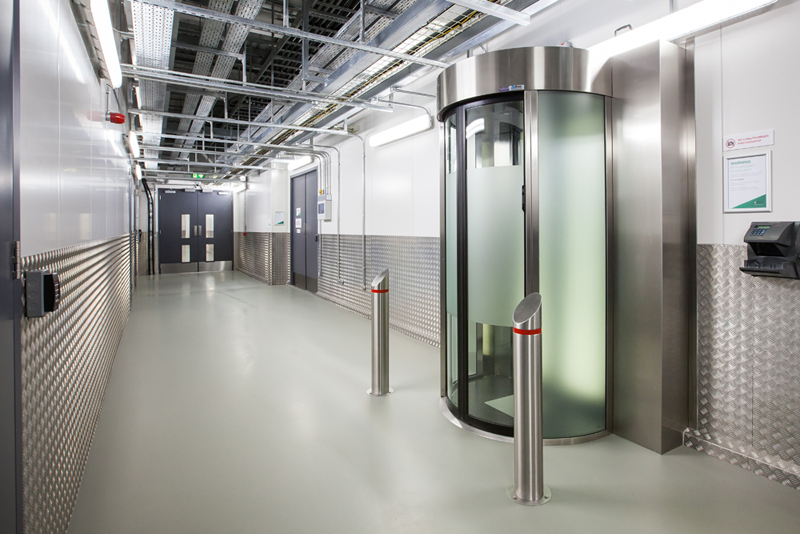
Security portals and interlocking doors provide essential protection in healthcare facilities. These systems secure sensitive areas, such as pharmacies and patient records rooms, while ensuring controlled access. This is the only equipment that is secured and can operate independently without any supervision, enhancing security and efficiency.
Key Solutions and Their Benefits
Enhanced Security for Sensitive Areas
Security portals ensure only authorized personnel access sensitive areas like pharmacies and records rooms, protecting valuable assets and patient data. They integrate with access control systems for robust security.
With 72% of healthcare breaches due to unauthorized access, secure portals significantly reduce these risks, providing a safer environment and maintaining patient confidentiality.
Efficient Workflow and Reduced Supervision
Security portals operate independently, eliminating the need for constant supervision. This frees up staff to focus on critical healthcare tasks, improving overall workflow efficiency.
Facilities can save on operational costs by reducing the need for additional security personnel, allowing resources to be allocated to patient care and other essential services.
Compliance with Regulatory Standards
Security portals help healthcare facilities comply with stringent regulatory requirements, including HIPAA and GDPR, ensuring patient data protection and legal compliance.
Non-compliance can lead to hefty fines and reputational damage. Implementing secure portals helps avoid these issues, safeguarding both the facility’s reputation and financial health.
Enhanced Infection Control
Touchless security portals and doors reduce physical contact, supporting infection control protocols crucial in healthcare settings. This minimizes the spread of pathogens.
Studies show touchless systems can reduce surface contamination, contributing significantly to infection prevention efforts in healthcare environments.
Improved Patient and Staff Safety
Security portals with biometric identification ensure accurate access control, preventing unauthorized entry and enhancing the safety of both patients and staff.
Healthcare facilities report a 50% decrease in security incidents when using advanced access control systems, creating a safer and more secure environment for everyone.
Streamlined Emergency Response
Security portals integrate with emergency response systems, ensuring swift and controlled access during emergencies, facilitating quick evacuation or containment.
Effective emergency access control can reduce response times by 40%, crucial for patient safety and efficient crisis management in healthcare facilities.
Cost-Effective Long-Term Solution
Investing in security portals provides a cost-effective solution with long-term benefits, including reduced maintenance costs and enhanced durability compared to traditional security measures.
Over time, facilities can save on security-related expenses by adopting advanced security portals, reallocating funds to other critical areas like patient care and facility improvements.